

One in one out rule is one of the simplest, yet most practical techniques for controlling clutter and maintaining order at home or work. If you often find yourself overwhelmed by piles of stuff, this guide will help you break the cycle, understand the science behind clutter, and apply sustainable declutter systems without complicated rituals.
Key Takeaways
- The one in one out rule stops clutter accumulation by requiring you to let go of one item every time a new item enters your space.
- Clutter has proven negative effects on mental health, focus, and productivity according to recent studies.
- This system is realistic, doesn’t require complete overhauls, and can serve as a powerful daily habit for households of any size.
- The Core Concept: What is the One In One Out Rule?
- Step-by-Step Guide: How to Apply the One In One Out Rule
- Advanced Analysis & Common Pitfalls
- Conclusion
- FAQ
The Core Concept: What is the One In One Out Rule?
The one in one out rule is a space management technique where every new possession that enters your home prompts the exit of an existing one. Whether it’s clothing, books, or gadgets, for each item that comes in, you intentionally remove another. This action builds a barrier against accumulation—and stops clutter before it can take hold.

This is not about minimalism for its own sake or following strict rules. It’s about achieving lasting order through small, conscious decisions. The rule is easier to integrate than declutter marathons and avoids the burnout many experience with “all or nothing” organizing systems. And while the big lifestyle overhauls like the 3 Simple Steps to a Tidy Home or KonMari Method are popular, most people need a rule they can stick to every single day.
Why does it matter? Scientific studies show that cluttered environments are not simply an eyesore—they tangibly reduce productivity and trigger psychological stress. A 2024 Yale study found that visual clutter impairs our brain’s ability to filter irrelevant information, creating a constant sense of overload (source). Other research links clutter to higher cortisol levels, irritability, and fatigue (source). If you’ve ever felt more anxious in a disorganized room, you’re not imagining it.
The genius of the one in one out system is its simplicity. When practiced consistently, it’s a quiet but powerful defense against mental overload, lost productivity, and wasted time rummaging through stuff you don’t need.
Step-by-Step Guide: How to Apply the One In One Out Rule
The magic lies in making this rule automatic, not controversial. Here’s how to embed it into your routines so it sticks, even if you live with partners, children, or roommates.
1. Pick a Category to Start
Begin with categories that tend to accumulate quickly—clothes are a classic example. You can also pick books, beauty products, or pantry items. For every new shirt, book, or jar, choose one to leave.
For kitchen organization inspiration, check out our deep dive on airtight glass food storage jars for clever pantry declutter strategies.
2. Make the Rule Visible and Universal
Explain the rule to everyone you live with. Simple signage in closets or shared spaces helps. For kids: Turn it into a game—“You got a new toy? Which will you pass on?” For roommates or partners, use shared reminders in your home organizer app (see how smart tech can help in our AI home organization tools guide). Get even more organized when you Make the Rule Visible with labeled containers for out baskets, shared spaces, and reminder lists.
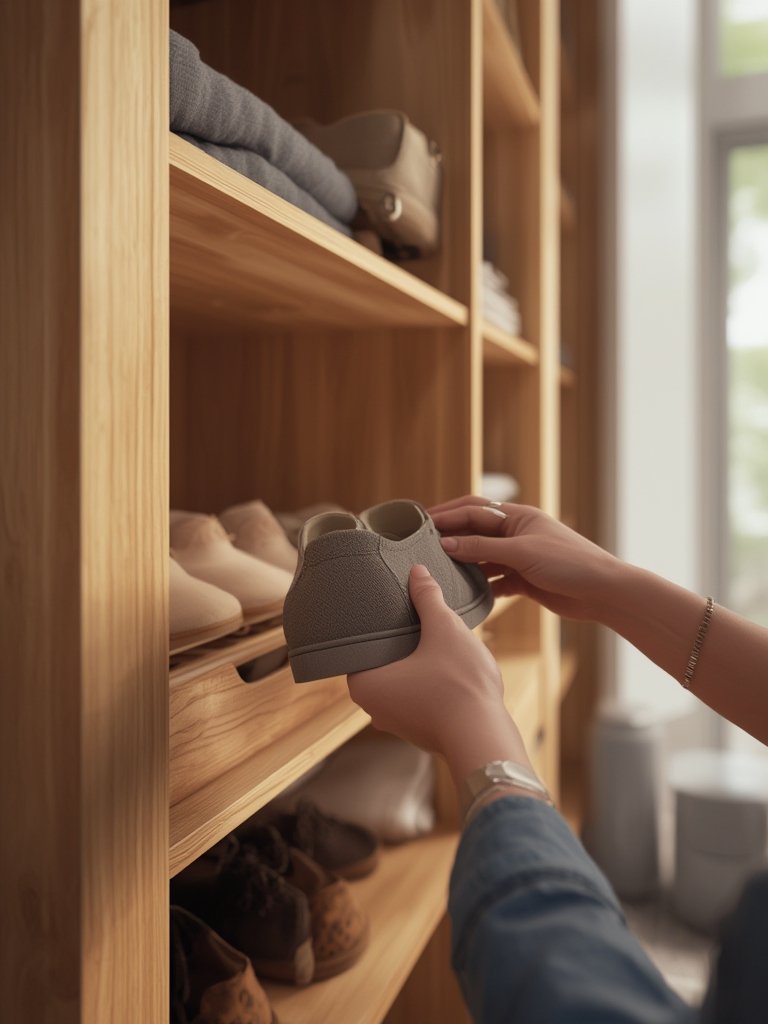
3. Apply at the Point of Entry
Don’t let items stack up at the front door, car trunk, or in the storage bin with tags still attached. The easiest moment to apply the rule is when the new thing enters your home.
4. Use Visual Reminders for Trouble Zones
Some categories slip under the radar: seasonal decorations, holiday gifts, or activewear. Tack a checklist or sticky note inside the storage bin or drawer as a prompt—or try the gym clothes organization hacks for more ideas.
5. Resist Exceptions (Most of the Time)
Inevitable exceptions (sentimental items, heirlooms, or “just in case” gear) will test your resolve. That’s normal. Use the one in one out rule as the baseline, but don’t be hard on yourself if certain items don’t fit the system. For dealing with guilt clutter and inherited items, see this guilt clutter strategy.
6. Reframe Buying Habits
Before every non-essential purchase, ask yourself: “Do I have space? What will I release?” Over time, this question shifts your mindset toward intentional, mindful consumption—see also the no buy year challenge for a more radical approach.
Advanced Analysis & Common Pitfalls
While the one in one out rule is elegantly simple, sticking to it in real life is rarely perfect. Here’s where most people stumble—and how you can avoid these traps.
Common Pitfalls
- Decision fatigue: Constantly deciding what to let go can be tiring and can trigger avoidance, especially when items have no obvious replacement.
- Sentimental clutter: Gifted items and family heirlooms are hard to part with and often become “exempt” from the rule—leading to secret clutter build-up.
- Exceptions for multi-member households: In larger households, items rarely have a one-to-one match. Negotiation and consistency become complex.
- Cheating the system: Stashing outgoing clutter in the garage or attic, rather than really letting it go, only relocates the problem.
How Does One In One Out Compare?
No conclusive head-to-head research compares this rule to the KonMari Method, chaos decluttering, or minimalist living. But unlike intensive methods that require big, one-time overhauls, one in one out focuses on daily, sustainable habits. For some, this method is easier to sustain than marathon purges like the 5-day clutter shakedown or Swedish death cleaning. For others, the slower, incremental approach feels like progress is too slow when faced with extreme clutter.
| Feature | One In One Out Rule | KonMari Method | Minimalist Living |
|---|---|---|---|
| Approach | Incremental, ongoing | Intensive, category-by-category | Philosophical lifestyle shift |
| Effort Required | Low per action, cumulative effect | High upfront, low maintenance | Varies (can be all or nothing) |
| Best For | Daily maintenance, families | Major resets, organizing enthusiasts | Those seeking total simplicity |
| Risk of Burnout | Low | High during purge | Medium (can become extreme) |
| Pitfall | Slow to address major backlog | Hard to sustain changes | Can feel restrictive |
Research-Backed Impacts of Clutter
While no peer-reviewed studies specifically validate the effectiveness of the one in one out rule itself, scientists agree on this: ongoing clutter reduction benefits your brain and mood. Research shows:
- Clutter elevates cortisol, leading to stress and fatigue (source).
- 92% of people say home organization boosts their mood; over 80% link clutter to anxiety or stress (source).
- Cluttered homes create more stress for women than men, possibly due to gendered social roles (source).
- Clutter impacts attention and working memory by activating areas like the anterior cingulate cortex (source).
Anyone struggling with decision fatigue or perfectionism around decluttering can benefit from systems designed to minimize ongoing micro-decisions. If you’d like a totally different approach, check out the chaos decluttering method for a more confrontational reset.

Conclusion
Clutter is relentless, but it is not unbeatable. The one in one out rule is a practical habit for maintaining order without overwhelm—perfect for busy lives and families. By focusing on mindful acquisition and offsetting every new item with a deliberate removal, you create an ever-renewing sense of control. For more declutter strategies, explore our step-by-step home organization guide. Start today—let the one in one out rule transform how you manage your stuff, and reclaim your space one decision at a time.
Ready to take control? Pick a category, set up your first “out” bucket, and make every new item count.
FAQ
How strict do I need to be with the one in one out rule?
It’s most effective when applied consistently, but allow yourself flexibility. Prioritize the rule for everyday categories like clothes and kitchenware, and relax it for sentimental possessions when necessary.
Does this rule work for large families or shared living?
Yes, but it requires clear communication and some collective decision-making. Use visible collection bins or digital reminders to keep everyone involved, and adapt rules based on each person’s main clutter categories.
How do I handle gifts or seasonal items?
For gifts, apply the rule if possible—can you let go of a similar category item? For seasonal gear, try to cull at least once a year, removing items not used in the last cycle.
What should I do if I miss a swap or the clutter piles up?
Don’t stress. The point is progress, not perfection. Take a quick inventory each season to catch up. If you’re overwhelmed, try the fast-reset 10-minute declutter challenge to jumpstart the process again.
Are there any alternatives to one in one out?
Absolutely. Systems like the KonMari Method, chaos decluttering, or even the no buy year challenge offer different strategies to reach your organization goals, depending on your personality and lifestyle.
[…] a one in one out rule for any new hobby. Commit to finishing starter kits before buying more supplies and reflect on what […]