

Bathroom linen declutter is the fastest way to create more space, save time, and keep your bathroom hygienic. If you’re tired of hunting for towels, tripping over messy piles, or just wondering what to do with old washcloths, you’re in the right place. Streamlining your bathroom linens isn’t about creating Pinterest perfection — it’s about easy routines that work in real homes.
Key Takeaways
- Decluttering your bathroom linens helps cut laundry time and prevents hygiene risks from aged towels.
- Set clear, practical criteria for what to keep, discard, or donate — and avoid storing items you never use.
- Most organization hacks work best when tailored to your actual space, habits, and needs — not just for show.
- What Is Bathroom Linen Declutter — and Why Bother?
- Step-by-Step Guide: Declutter Your Bathroom Linen Like a Pro
- Advanced Analysis & Common Pitfalls
- Conclusion
- FAQ
What Is Bathroom Linen Declutter — and Why Bother?
Bathroom linen declutter means systematically sorting, editing, and organizing all your towels, washcloths, and bathmats so you only keep what you actually use. It’s not just about saving space. Healthy routines start in a clean bathroom, and fresh, accessible linens make life easier — particularly when you’re in a hurry.
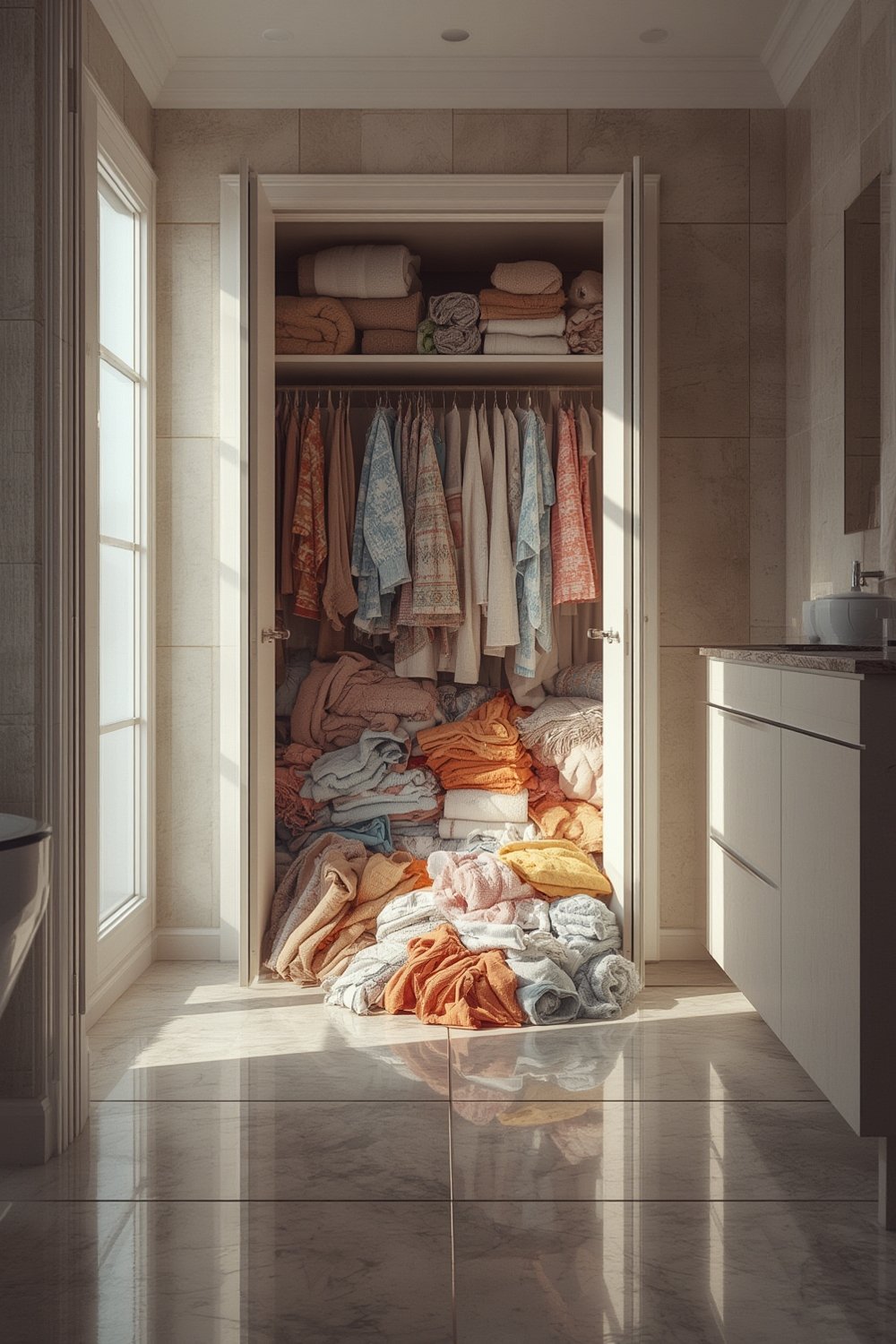
Most homes never set a rule for when a towel should be tossed or a bathmat retired. This means old, scratchy, or even unhygienic items get piled on shelves and make the whole closet hard to use. According to South Shore Fine Linens, a good storage system prevents your clean linens from being soiled — but few sources offer guidance on actual discard criteria, donation steps, or health implications of letting linens linger past their safe lifespan.
Although there’s 7.3 square feet of offsite storage per person in the US, this rarely helps households with stuffed linen closets. If you’re spending over two hours weekly on laundry (the national average, see source), you could be losing precious time hunting for matching sets. Decluttering is the reset that makes your entire bathroom routine feel less chaotic.
Interested in tackling other spaces? When you’re ready, try the 3 simple steps to a tidy home next — the basics apply everywhere, not just in the bathroom.
Step-by-Step Guide: Declutter Your Bathroom Linen Like a Pro
Ready to dive in? Here’s how to get your bathroom linens under control using a practical, repeatable method that works for real people and real closets.
-
Sort EVERYTHING Into Four Piles:
- Keep — Good condition, regularly used, soft and absorbent.
- Downgrade — Older but still usable (move to rag bin or garage, not the bathroom).
- Donate — Clean, gently used (see next steps for where).
- Toss — Frayed, stained, smelly, or losing absorbency (these are hygiene risks).
-
Use a “One In, One Out” Rule:
For each new towel set you buy, immediately let go of at least one old set. This is the only practical way to prevent the closet from overflowing again. Learn more about this strategy in the one in, one out rule guide.
-
Don’t Keep “Emergency” Linens You Never Use:
Old, rough towels stored “just in case” rarely get used — but collect dust and allergens. Most closet space goes to everyday wardrobe, so be ruthless about what earns a shelf.
-
Give Everything a Dedicated Spot:
- Rolled or folded by type — bath towels, hand towels, washcloths, bathmats.
- Visible, front-row placement for daily items; extras or guest sets in back or top shelf.
- Use labeled bins or storage bags, for example, Budding Joy 90L storage bags, to corral seasonal or rarely-needed linens.
-
Establish Discard Criteria Based on Use and Safety:
Replace towels and washcloths every 1-3 years, or sooner if they’re faded, musty, or rough (old fibers can harbor bacteria). If in doubt, toss it out. For more on safety-driven purging, see our expired skincare purge guide — the principles apply to linens, too.
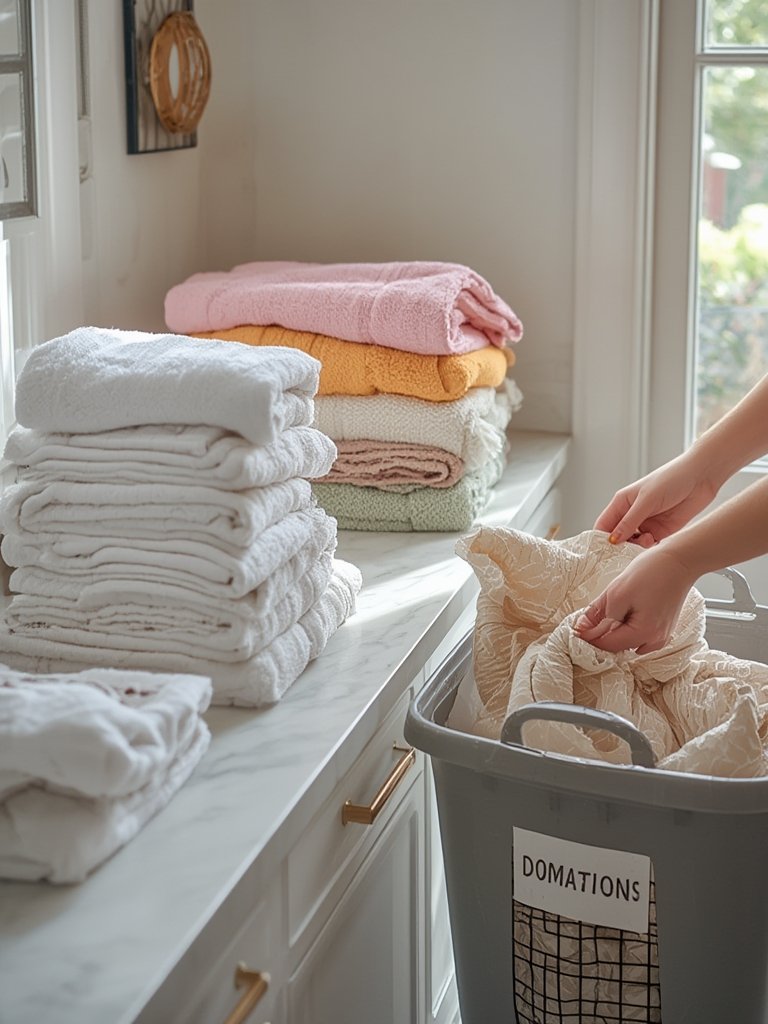
What to Do With Discarded Linens?
- Sanitize and donate clean, gently used towels and sheets to local animal shelters or homeless organizations. Some animal rescues urgently need donations for bedding (call to confirm acceptance — guidelines can change).
- Repurpose worn towels as cleaning rags, car wash cloths, or emergency pet bedding.
- Avoid donating anything musty, with holes, or heavily stained — these carry hygiene risks and will likely be discarded by the charity.
Actionable Maintenance Tips
- Set a biannual linen audit on your calendar — edit ruthlessly every 6 months.
- Run a quick 10-minute declutter challenge using the 10-minute declutter challenge format for a fast win when the closet looks messy.
- Keep a visible “donate soon” bag in the linen closet for items you notice are no longer serving you.
If motivation disappears, borrow tricks from the cobwebbing method — this mindset hack helps you detach from the “emotional cobwebs” that keep unused linens on your shelves.
Advanced Analysis & Common Pitfalls
Bathroom linen declutter is simple in theory — but most people hit roadblocks after step one. Here’s what research and lived experience say about common mistakes (and how to avoid them):
| Pitfall | Why It Happens | How to Fix |
|---|---|---|
| Never setting discard rules | No guidance on lifespan, hygiene, or safety risks lets questionable towels linger. | Mark calendar reminders to audit every six months. If a towel smells, is rough, or heavily stained, discard immediately. |
| Keeping for “someday” | Fear of needing extras “just in case,” especially old favorites or mismatched sets. | Limit linen sets to your family size plus two guest sets. Donate the rest. |
| Mismatched or old linens causing clutter | It feels wasteful to toss old items, but mismatched sets often never get used. | Embrace the “wear-it-or-donate” logic from the capsule wardrobe guide for linens, too. |
| Skipping donation research | Most guides forget to list places that truly need old towels/sheets. | Call local shelters and animal rescues first. Only donate what they actually need—otherwise, repurpose as rags. |
It’s also perfectly normal to feel guilty about discarding “perfectly usable” linens. If this causes decision paralysis, the guilt clutter approach offers permission to let go, especially of items received as gifts or handed down.
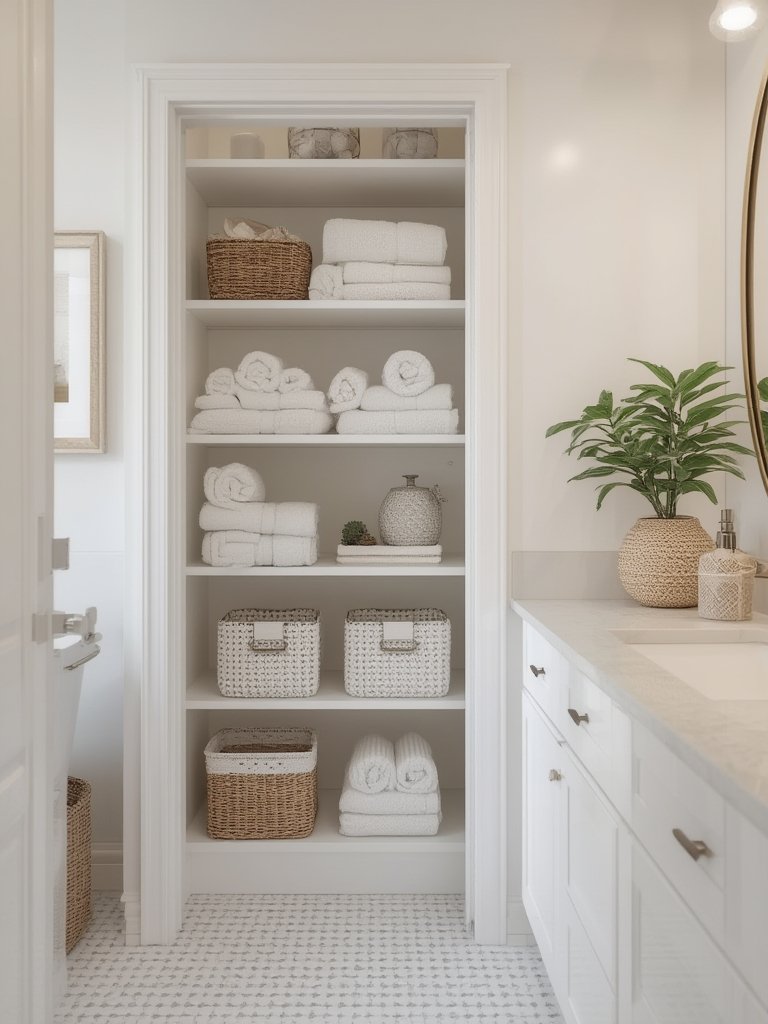
Finally, don’t expect decluttering to magically save hours every week. According to South Shore Fine Linens, better linen organization can reduce laundry and search time, but quantify the payoff for yourself. If you’re struggling with motivation, a no buy year can stop new clutter from sneaking in while you get organized.
Conclusion
Messy linen closets waste your time and sanity. By embracing a focused bathroom linen declutter routine — one with discard rules and donation plans — you’ll make your whole bathroom easier to use and keep clean. Remember, it’s not about matching towels or show-home perfection. It’s about setting up realistic routines that work, so you never have to dread opening your linen closet again. Start your declutter today — and if you need help building lasting habits, check out our 10-minute declutter challenge for easy, ongoing wins!
FAQ
How often should I replace towels and washcloths?
Experts recommend replacing bath towels every 1-3 years, sooner if they become scratchy, stained, or smelly. Washcloths need replacing even more frequently, as they’re prone to bacteria and wear.
Can old linens be donated, and where?
Yes, clean and gently used towels can be donated to homeless shelters or animal rescues. Always call ahead to check their current needs and acceptance criteria.
What’s the fastest way to declutter my linen closet?
Use the “drawer dumping method” — empty everything onto a surface, sort in one go, and put back only the essentials. Set a timer to stay focused.
Do mismatched towels matter for hygiene or just looks?
Mismatched isn’t unsafe — but old, worn out, or musty towels can harbor germs. Focus more on condition than on matching colors when deciding what to keep.
How can I stop my linen closet from getting messy again?
Try the “one in, one out rule” — every time you add new linens, discard an old set. Schedule regular 10-minute declutters to maintain order with minimal effort.