

Junk drawer organization is one of the most searched-for home hacks in 2026—and with good reason. Nearly everyone has a messy catchall drawer that’s overflowing with odds and ends, making it nearly impossible to find what you actually need. If you’re tired of rummaging for batteries or mystery keys, you’re not alone and it’s time to get real about restoring order to your cluttered drawer.
Key Takeaways
- 95% of U.S. households have a junk drawer and 89% admit it’s disorganized.
- Decluttering your junk drawer fast doesn’t require fancy products—in fact, simple routines and creative ideas work best.
- Failing to maintain or label your drawer leads to quick relapse into chaos; setting easy habits is crucial for lasting results.
- What Is Junk Drawer Organization and Why Does It Matter?
- Step-by-Step Guide: Organize Your Junk Drawer (For Real)
- Advanced Analysis & Common Pitfalls of Junk Drawer Organization
- Conclusion
- Frequently Asked Questions
What Is Junk Drawer Organization and Why Does It Matter?
The average junk drawer in America now holds 53 random items—with some households in Maine cramming over 70 bits and bobs in a single space. In 2024, a national survey showed that 95% of Americans have at least one junk drawer, and 89% admit it is at least “a bit messy”—25% describe it as “complete chaos.” [source] Ignoring the mess may seem harmless, but a disorganized drawer wastes time, increases stress, and often leads to buying duplicates (because you can’t find what you know you already own).
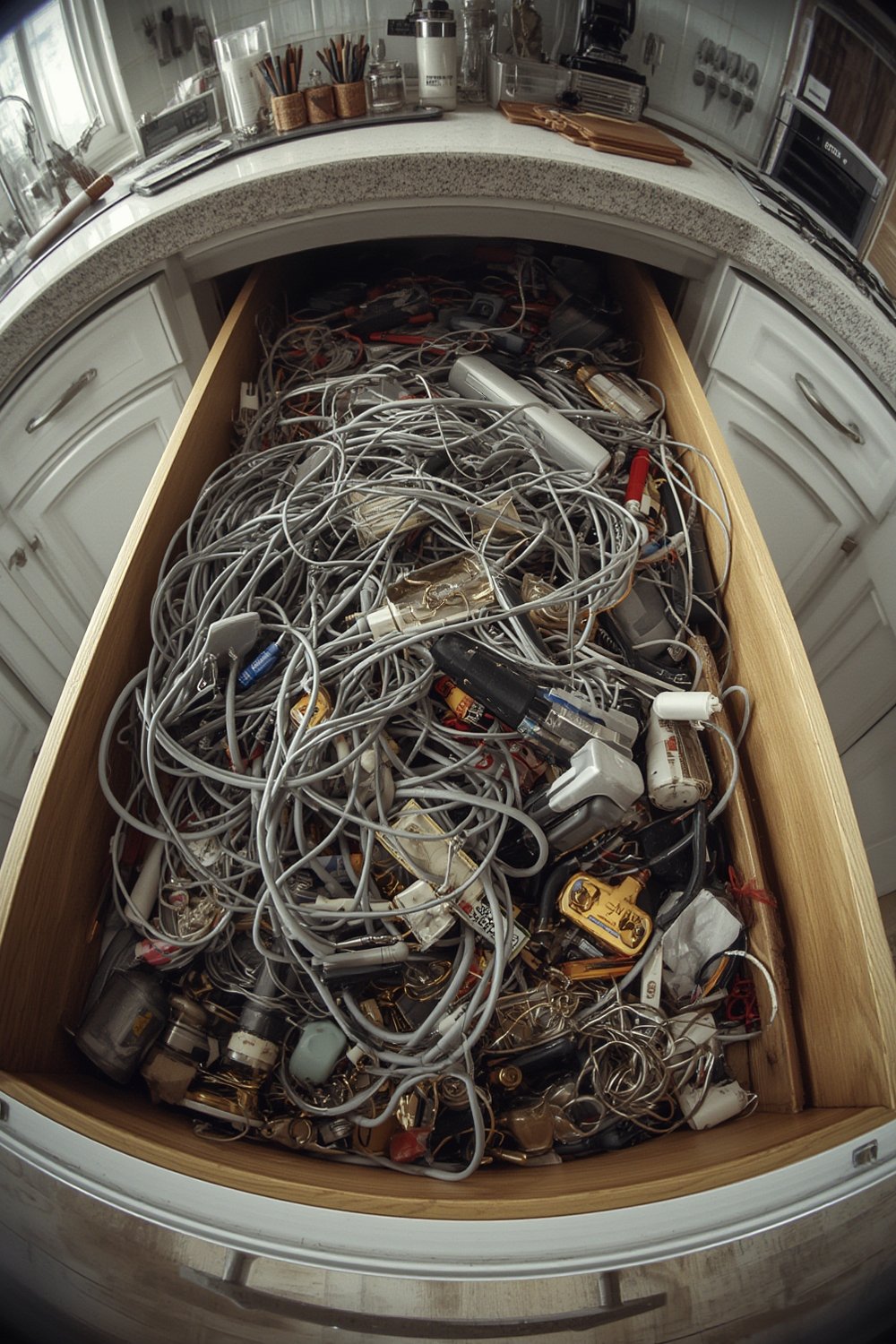
Organization is about more than aesthetics. When you take five minutes to set up real structure in your everything drawer, you spend less on wasted supplies, avoid the frustration of endless searching, and keep small spaces from devolving into aggravating black holes. Unlike large-scale projects like a capsule wardrobe, transforming a single drawer is fast, affordable, and realistic for anyone.
Step-by-Step Guide: Organize Your Junk Drawer (For Real)
Ready for the drawer reset? Here’s a practical guide that skips the hype and gets straight to action—no fancy products required.
- Empty Everything Out
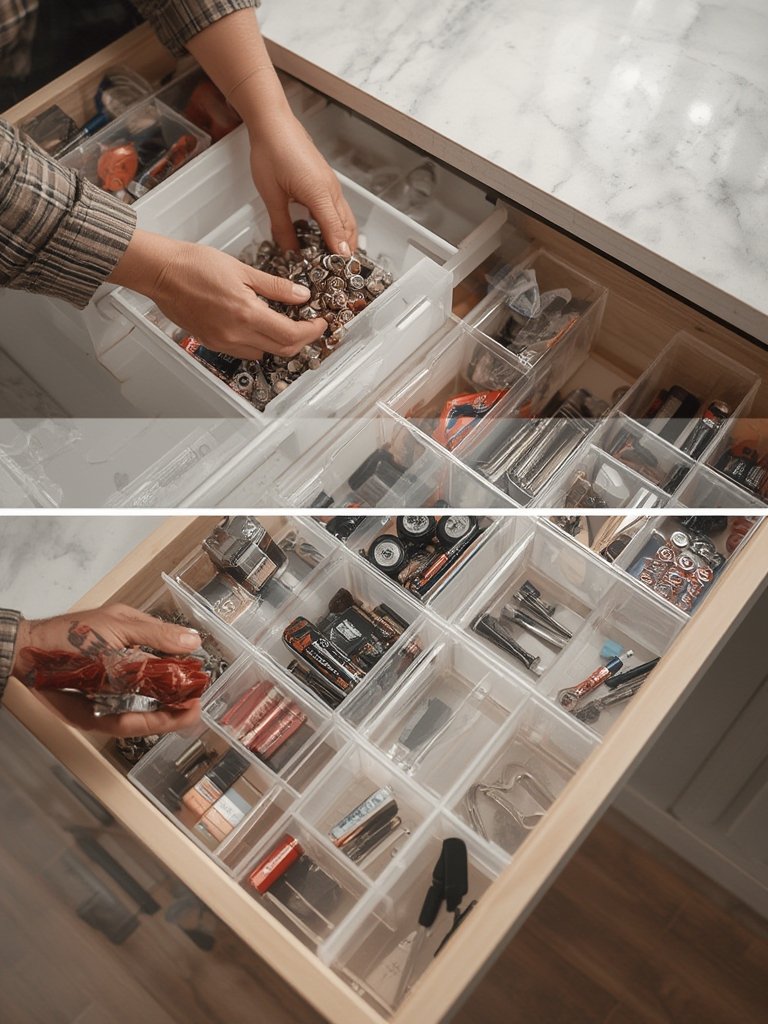
Spread a towel or tray and dump the entire drawer. This shock-and-awe approach makes it impossible to ignore what you’ve accumulated—and forces you to make real decisions. (The chaos decluttering method brings the same results on a bigger scale!). - Group by Use, Not by Type
Create piles based on real-life use: “fix-it tools,” “batteries and chargers,” “sticky notes/stationery,” and “miscellaneous.” Forget about searching for the perfect category—a system that matches your habits works best. - Purge Mercilessly
If you’ve bought duplicates, have worn-out pens, or mystery cables, out they go. (Check out tips on cable management if cords overrun your drawer.) Anything broken, dried, short, expired, or unknown can be safely discarded. If something belongs elsewhere, put it back where it’s actually needed. - Divide the Space
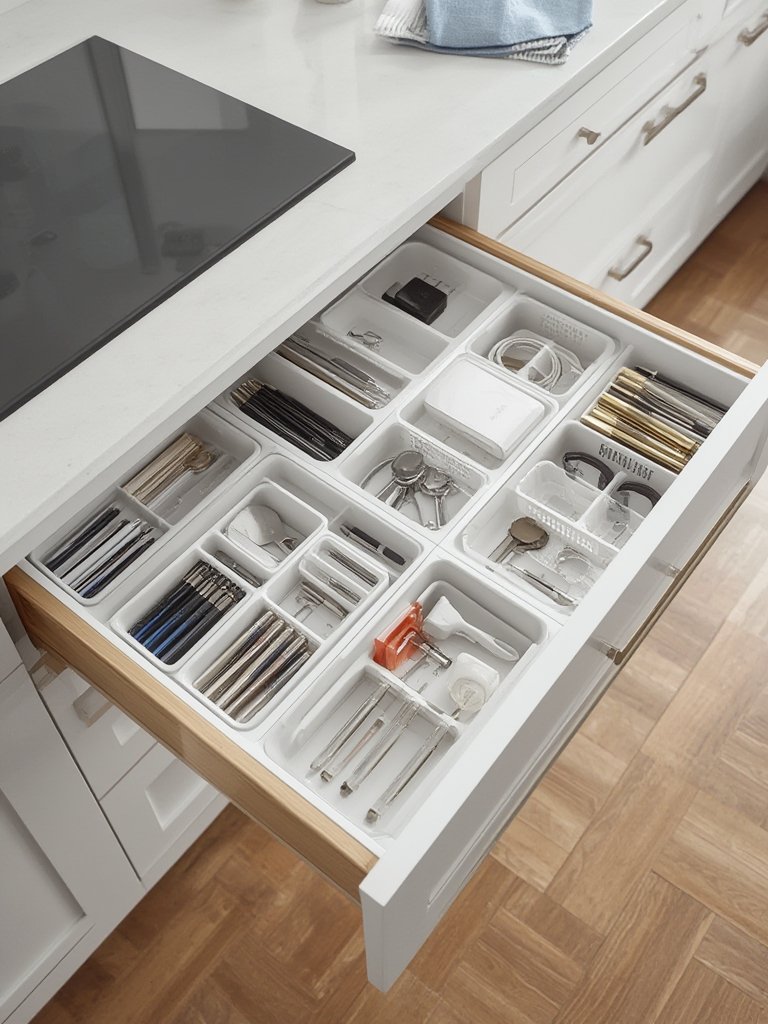
Use simple containers—upcycled food tubs, cardboard, or even small boxes from kitchen organization projects. You don’t need to buy expensive divider trays. - Label Critical Sections
Use tape and a marker to label sections, even if roughly hand-written. This one-minute step helps everyone in the house return things to the right zone, reducing future chaos. - Only Refill Essentials
Place items you use weekly within easy reach. Retain only one or two extras (batteries, pens) instead of stashing dozens “just in case.” The fewer items you keep, the easier it is to maintain.
Bonus: Add a recurring reminder in your calendar to do a 5-minute reset every season. This single habit is the difference between a tidy drawer and a graveyard of mysterious items.
To cement your new system, combine with the one in, one out rule: whenever something new goes in, something old comes out. This is a proven hack used in declutter hacks reviews to prevent quick reversion to clutter. If motivation dips, take the 10-minute declutter challenge for even faster wins.
Advanced Analysis & Common Pitfalls of Junk Drawer Organization
Why do most attempts at junk drawer organization fail within weeks? Surveys show 89% of drawers are still a mess, and only 11% of users have a consistently organized space [source]. Here’s where things go wrong—the problems (and solutions) most blogs ignore:
- Decision Fatigue: Sorting a flood of random objects can be exhausting. The key is to make decisions quickly using the drawer dumping method rather than getting bogged down in endless sorting.
- Overcomplicating Dividers: Fancy trays seem helpful, but if sizing is off or they’re not customized for your actual stash, chaos returns. Homemade organizers or adjustable bins from previous kitchen gadget declutter projects work better for most households.
- Lack of Labeling: If just one person in your household doesn’t know what goes where, or if new items arrive without a spot, clutter creep is inevitable. Clear labels solve 80% of this struggle, even if they’re not pretty.
- No Maintenance Routine: 52% of people clean their drawer annually or less, 10% never clean [source]. Setting a quarterly check-in keeps everything functional.
| Common Pitfall | Real-World Impact | Simple Fix |
|---|---|---|
| Adding new items without purging | Drawer overflows, making it impossible to find anything | Use the one in, one out rule established in tidying routines |
| Ignoring labeling | Family members don’t follow the system, causing relapses | Quickly label zones when you reorganize |
| Rarely maintaining | Clutter rebounds within months | Set quarterly calendar reminders for super-fast resets |
| Buying rigid, ill-fitting dividers | Items don’t stay in their space, or you stop using the system altogether | Customize or upcycle containers for a flexible fit |
If you struggle to break emotional attachment to random “maybe useful someday” items, try strategies like the cobwebbing method for sentimental clutter.
For digital clutter, which often mirrors our physical mess, don’t miss the actionable steps in the digital declutter 2026 guide.
Conclusion
Transforming your catchall space doesn’t have to be complicated or time-consuming. Start with a full dump, ruthlessly edit, and design a basic zoning system that matches your lifestyle. The right junk drawer organization approach is realistic, quick, and sustainable—for once, your everything drawer can stop being a source of stress and actually save you time.
Ready for a reset? Commit to 15 minutes and put your junk drawer in order. You’ll be surprised how freeing it feels
Frequently Asked Questions
How often should I reorganize my junk drawer?
Ideally, do a quick 5-minute reset every 3 months. This prevents accumulation and keeps your new system functional with minimal effort.
What should never go in a junk drawer?
Anything dangerous (sharp blades, medicine), vital documents, or items with sentimental value should be stored securely elsewhere. Junk drawers are best for common odds and ends you grab frequently.
Can I organize my junk drawer without buying new organizers?
Absolutely. Most effective systems use recycled containers like food boxes, muffin tins, or small jars to divide space. Expensive organizers are optional, not required.
How do I stop my family from ruining my new organization system?
Label each section with tape and marker, make zones visible, and explain the system. Quick, visible maintenance routines (such as a seasonal reset) involve everyone and keep things in check.
What if I have too many “miscellaneous” items?
If you can’t categorize it, question if it needs to be in the drawer at all. Limit the pure “misc” category to a single small container. If that fills up, purge before adding more.